Casey Wasserman to Exit Namesake Agency as Providence Equity Partners Moves Toward Full Buyout Amid Ongoing Controversy

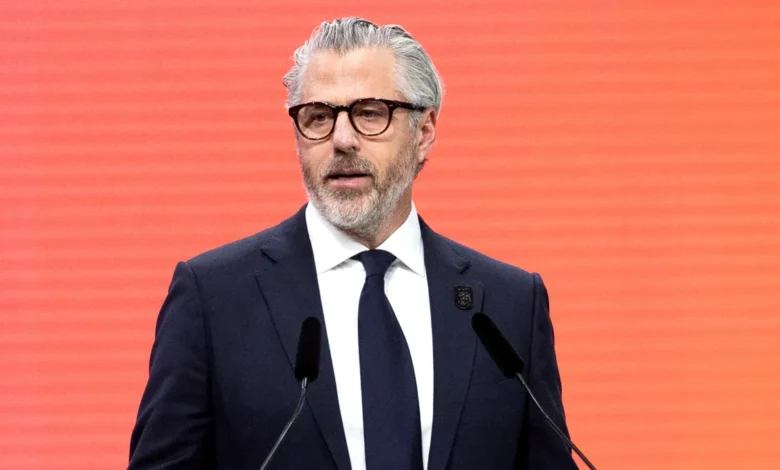
Casey Wasserman, the prominent sports and entertainment mogul who founded Wasserman Media Group in 2002, is reportedly in advanced negotiations to sell his remaining stake in the company to Providence Equity Partners. This move, which would effectively end his leadership tenure at the firm recently rebranded as "The Team," comes after months of internal and external pressure following the revelation of his past correspondence with figures linked to the Jeffrey Epstein scandal. According to reports first surfaced by Puck, the deal would see Providence—which already holds a significant equity position in the firm—take full control, bypassing external suitors such as United Talent Agency (UTA) and Patrick Whitesell’s nascent venture, WIN.
The transition marks a seismic shift in the Hollywood and sports representation landscape. For over two decades, Wasserman has been a synonymous figure with the intersection of athlete management and corporate branding. However, the fallout from the release of Department of Justice documents earlier this year has transformed the founder from a strategic asset into what he himself described as a "distraction." The potential buyout by Providence Equity Partners represents a strategic move to stabilize the agency’s future while maintaining the aggressive growth trajectory established over the last several years.
The Auction Process and the Shift to Internal Buyout
The path to this potential sale began in earnest three months ago when investment bank Moelis & Co. was tasked with handling an auction for the firm. The process was initiated after Providence Equity Partners, which first invested in Wasserman in November 2022, reportedly pressured the mogul to explore an exit strategy. The auction drew significant interest from major industry players. United Talent Agency (UTA), looking to bolster its sports and music presence, was widely considered a primary contender. Similarly, Patrick Whitesell, the executive chairman of Endeavor who recently launched the independent firm WIN, was identified as a serious bidder.
Despite the interest from outside entities, the momentum has shifted toward an internal consolidation. By selling his stake directly to Providence, Wasserman ensures that the firm remains under the stewardship of its existing financial backers. Providence has been instrumental in the agency’s recent expansion, including the high-profile acquisition of Brillstein Entertainment Partners in September 2023. A buyout by an existing partner suggests a desire for continuity in management and strategy, even as the founder prepares to depart.
The involvement of Moelis & Co. added another layer of industry complexity to the proceedings. Ken Moelis, the head of the investment bank, serves on the board of the LA28 Olympics Committee, which Casey Wasserman chairs. This overlap highlighted the deeply interconnected nature of Wasserman’s business and civic roles, a web of influence that has come under intense scrutiny in recent months.
Chronology of a Crisis: From DOJ Documents to Artist Exodus
The catalyst for the current sale was a series of events that began in late January 2024. The release of a tranche of Department of Justice documents related to the investigation of convicted sex trafficker Jeffrey Epstein and his accomplice Ghislaine Maxwell included communications involving Wasserman.
January 2024: Documents are unsealed showing that in 2003, Wasserman and Maxwell exchanged a series of messages. While the emails did not detail criminal activity, the tone was described as flirtatious and informal. It was also noted that Wasserman had traveled on Epstein’s private jet in 2002 as part of a high-profile AIDS research trip to Africa, a delegation that included former President Bill Clinton and actors Kevin Spacey and Chris Tucker.
January 31, 2024: Wasserman issued a formal apology, stating: "I deeply regret my correspondence with Ghislaine Maxwell which took place over two decades ago, long before her horrific crimes came to light. I never had a personal or business relationship with Jeffrey Epstein."
February 2024: Despite the apology, a "rebellion" began within the agency’s music division. More than 20 high-profile artists and performers announced they were severing ties with the agency. Notable names included the Grammy-winning artist Laufey, breakout pop star Chappell Roan, indie rock band Best Coast, and prominent DJ John Summit. Social media platforms for the agency were inundated with demands for talent to distance themselves from Wasserman.
February 14, 2024: In a memo to staff, Wasserman admitted he had become a "distraction" to the firm’s operations. Simultaneously, Providence Equity Partners issued a public statement of support for the company’s president, Mike Watts, and the broader organization, signaling that while the founder’s role was in question, the firm’s mission remained intact.
March 2024: In a move to further distance the brand from its founder, the agency officially rebranded from "Wasserman" to "The Team." The firm’s previous marketing slogan, "Team Wass," was retired as part of a comprehensive effort to decentralize the company’s identity.
April 2024: The first round of bids for the company was submitted to Moelis & Co., setting the stage for the current buyout negotiations with Providence.
Financial Standing and Market Position
To understand the stakes of the Providence buyout, one must look at the financial powerhouse Wasserman built. As of 2024, the agency—now The Team—stands as one of the most formidable entities in the global sports and entertainment economy.
According to a June 2023 report from S&P Global, Wasserman’s sports division alone generated approximately $266 million in revenue in 2024, accounting for roughly 29 percent of the company’s total annual earnings. In the highly competitive Hollywood landscape, these figures place the agency’s sports arm second only to Creative Artists Agency (CAA), which generated an estimated $578 million in sports-related revenue during the same period.
The agency’s growth has been fueled by a series of aggressive acquisitions designed to create a "full-service" ecosystem for talent.
- Music Expansion: In 2021, the firm acquired Paradigm Talent Agency’s North American music division, instantly making it a dominant force in the live touring and music representation space.
- Management and Production: The 2023 acquisition of Brillstein Entertainment Partners allowed the firm to integrate elite talent management and content production into its portfolio, mirroring the diversified models of WME and CAA.
- Global Footprint: With over 4,000 employees worldwide, the firm operates across marketing services, talent representation, and media rights, making it a critical infrastructure provider for the sports and entertainment industries.
Providence Equity Partners initially entered the fray by replacing previous investors RedBird Capital and Madrone Capital Partners. Those firms were forced to divest their interests in Wasserman due to conflict-of-interest regulations after they acquired stakes in professional sports teams, including AC Milan and the Denver Broncos. Providence’s move to now acquire 100 percent of the founder’s stake underscores their belief in the underlying value of the agency’s diverse assets, independent of the founder’s personal brand.
The LA28 Complication and Political Fallout
While Wasserman navigates his exit from the talent management business, he remains a central figure in the planning of the 2028 Olympic Games in Los Angeles. As the chair of the LA28 Committee, he is responsible for the logistics, fundraising, and execution of one of the world’s largest sporting events.
The Epstein-related headlines have led to significant political friction in Los Angeles. Mayor Karen Bass and other city officials have faced public calls to demand Wasserman’s resignation from the committee. However, the LA28 board has remained steadfast in its support. In February, the committee announced it had commissioned an independent legal investigation into Wasserman’s past conduct. The firm conducting the review reportedly found that his relationship with Maxwell and Epstein did not extend beyond what was already a matter of public record and did not involve any legal or ethical breaches related to his current role.
Despite this clearance, the dual pressure of managing a global agency in crisis and a multi-billion dollar Olympic project has clearly taken a toll. The sale of his stake in The Team is viewed by many industry analysts as a necessary step to protect the Olympic committee from further negative publicity while allowing the agency to move forward under institutional rather than individual leadership.
Analysis of Implications for the Agency Model
The transition of The Team from a founder-led boutique to a private equity-owned institutional powerhouse reflects a broader trend in the representation industry. For decades, agencies were built on the "Great Man" theory—personalities like Lew Wasserman (Casey’s grandfather), Michael Ovitz, and Ari Emanuel defined their firms. However, as these companies scale into multi-billion dollar enterprises with thousands of employees, the risks associated with a single founder’s reputation become a liability for institutional investors.
By taking full control, Providence Equity Partners is likely looking to implement a more corporate governance structure. This shift may help in recruiting and retaining talent who were previously wary of the controversies surrounding the firm’s namesake. For the 4,000 employees of The Team, the move toward Providence ownership suggests a period of stabilization, though it remains to be seen if a new CEO will be appointed or if the current leadership under Mike Watts will be granted permanent autonomy.
Furthermore, the exit of Casey Wasserman could trigger further consolidation. With UTA and WIN having already expressed interest, the industry will be watching closely to see if Providence eventually looks to merge The Team with another entity or if they intend to take the company public in the coming years.
Conclusion
The pending sale of Casey Wasserman’s stake to Providence Equity Partners marks the end of an era for the agency he founded 22 years ago. What began as a sports-focused firm grew into a global conglomerate that challenged the dominance of the "Big Three" agencies in Hollywood. However, the intersection of historical personal associations and the modern demands of corporate accountability has necessitated a clean break.
As the deal nears completion, the focus will shift to how "The Team" performs without the man who was once its greatest salesman. For Casey Wasserman, the move provides a path to resolve a business crisis that threatened to overshadow his legacy, even as he remains under the spotlight as the architect of Los Angeles’ Olympic future. For the entertainment and sports industry, it serves as a stark reminder of the speed at which the landscape can shift when the personal and the professional collide in the age of transparency.